
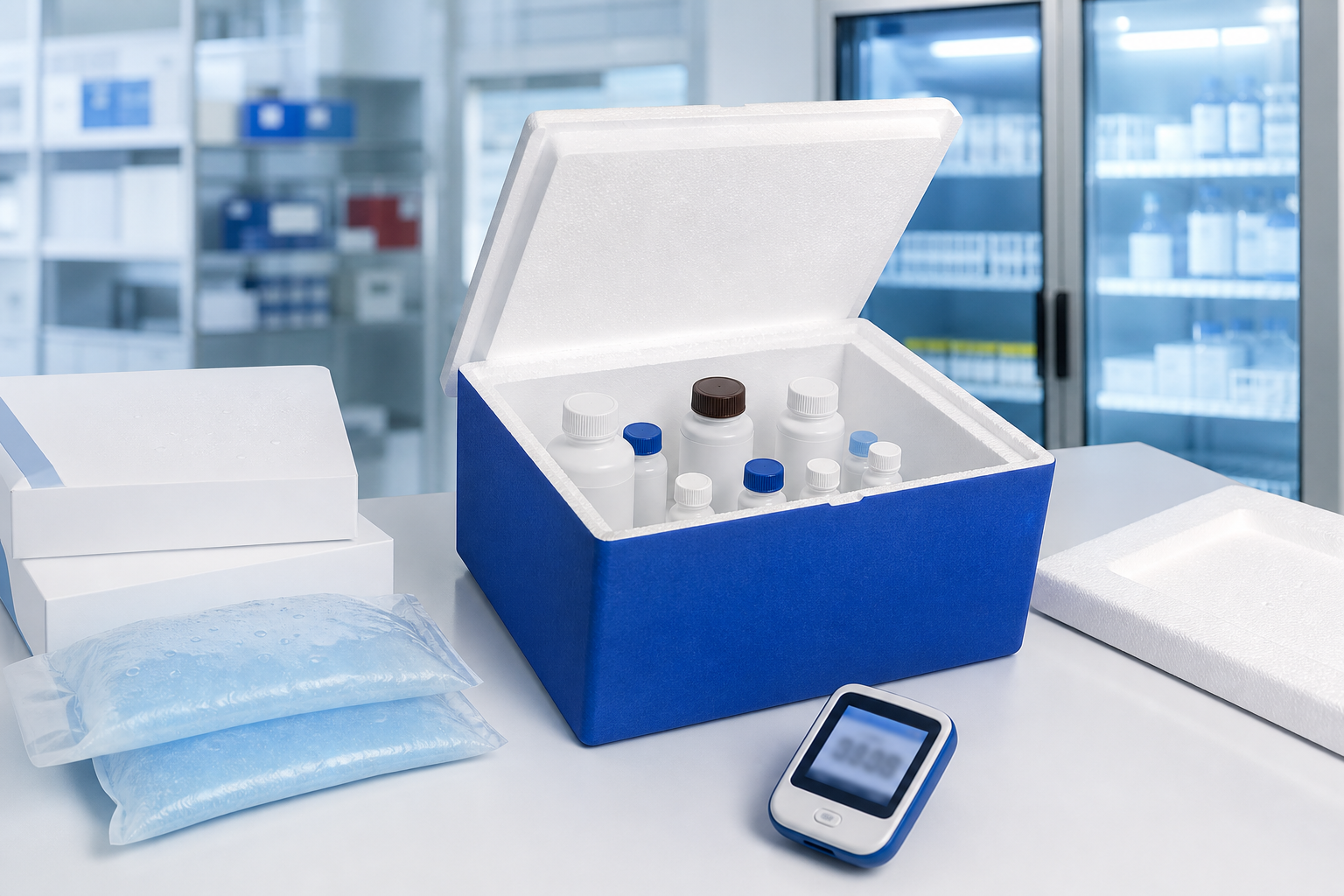
Cold-chain planning is rarely the most glamorous part of coagulation diagnostics, but it is one of the most practical. A reagent can perform well in development and pass internal QC, yet fail commercially if it cannot survive the actual path from manufacturer to distributor, from distributor to regional warehouse, and from warehouse to the laboratory refrigerator. For PT, APTT, FIB, TT, D-Dimer, FDP, and AT products, storage and transport discipline protect both analytical performance and customer confidence.
Developing markets often add extra complexity. Distances may be long, customs clearance may be unpredictable, power supply may vary by region, and small laboratories may not have ideal cold storage. These realities do not make high-quality coagulation testing impossible, but they do require planning before the first shipment leaves the factory.
Stability data should match real routes
Manufacturers usually generate real-time and accelerated stability data under defined conditions. That information is necessary, but distributors should ask whether the data reflects their route. A product stored at 2-8 degrees Celsius in a controlled facility may behave differently after repeated loading, unloading, and temporary exposure during transport. The question is not only whether the reagent is stable on paper; it is whether the supply chain can maintain the conditions assumed by the stability claim.
For OEM and localization projects, route mapping should be part of early planning. Where will the product be filled? How long will it sit before release? How is it packed? How many temperature transitions occur before the end user receives it? Who reviews temperature records? Answering these questions early prevents disputes later.
Packaging is risk control
Insulated boxes, gel packs, bottle size, secondary packaging, and carton design all influence reagent protection. Packaging should be tested for the expected shipping duration and climate. A package that works in winter may not be sufficient in summer. A box that performs well for a direct shipment may fail if the parcel sits in a local hub for an extra day.
Packaging decisions also affect user adoption. Small laboratories may prefer kit sizes that reduce waste after opening. Larger laboratories may prefer bulk formats and fewer bottle changes. For a distributor, matching package size to customer volume is a form of quality management because it reduces the chance that reagents remain open beyond practical use.
Temperature monitoring should be actionable
Temperature loggers are useful only if someone reviews them and knows what to do with the information. A shipment record should identify whether the product stayed within range, whether any excursion occurred, how long it lasted, and whether the manufacturer has criteria for release or rejection after that excursion. Vague statements such as “probably acceptable” are not enough when laboratories depend on stable coagulation results.
Distributors should define a simple escalation path. If a logger shows a problem, who is contacted? Is the product quarantined? What evidence is sent to the manufacturer? Is the customer informed before delivery? A clear process protects the end user and also protects the supplier from inconsistent local decisions.
Laboratory storage completes the chain
The cold chain does not end at delivery. Laboratories need appropriate refrigerators, temperature records, separation of opened and unopened reagents, and staff training on handling after removal from storage. Repeated warming and cooling can become a hidden source of variation, especially in low-volume sites where bottles remain in use for longer periods.
Laboratories should avoid storing reagents in crowded refrigerators where airflow is poor or where door opening is frequent. They should also understand onboard stability claims, open-vial stability, and any mixing requirements before use. Good storage habits are a low-cost way to protect PT/APTT screening and specialized assays such as fibrinogen, thrombin time, FDP, D-Dimer, and AT.
Localization can reduce logistics pressure
Local production or regional filling may reduce shipping complexity, but it does not remove stability responsibility. Bulk liquid supply, raw material qualification, local water quality, filling hygiene, packaging validation, and finished-product release all need control. A localization project should include a stability strategy for the finished local product, not simply import a foreign label claim.
TY Biological Engineering Co., Ltd. supports partners who need both finished coagulation reagents and OEM localization pathways. In practice, the strongest projects treat cold chain, stability, packaging, and documentation as part of the product itself. That kind of planning makes reagent supply more predictable and helps laboratories focus on patient samples instead of shipment surprises.
Release decisions should be documented
When a shipment arrives with complete temperature records, the distributor should document release to inventory. When records are missing or show an excursion, the product should be held until a technical decision is made. This discipline is especially important for partners building a local brand. One poorly handled shipment can create a reputation problem that is difficult to repair.
Laboratories can support the same discipline after delivery. Refrigerator temperature logs, separation of expired stock, first-expiry-first-out use, and clear handling of opened bottles all reduce waste. Cold-chain control is not only the manufacturer’s responsibility; it is shared across the whole route from production to final testing.